
While the Fed and the ECB slash and raise rates when needed, the RBI seems to move in just one direction.

Sun Pharma was the top loser in the Sensex pack, falling over 3 per cent, followed by IndusInd Bank, Bharti Airtel, Kotak Bank, ICICI Bank and HDFC Bank. Nifty fell 59.75 points to 17,829.20.

Among the Sensex stocks, JSW Steel, Asian Paints, Maruti Suzuki India, NTPC, Adani Ports and Special Economic Zone, Bharti Airtel, ITC and Tech Mahindra were the major gainers. Reliance Industries, Tata Motors, Infosys, Mahindra and Mahindra, Bajaj Finance and Axis Bank were the laggards.

Among the 30 Sensex firms, HCL Technologies, NTPC, Bajaj Finserv, Tech Mahindra, JSW Steel, Titan, Mahindra & Mahindra, Tata Steel, Larsen & Toubro and Tata Consultancy Services were the biggest gainers. Kotak Mahindra Bank, IndusInd Bank, Maruti and Hindustan Unilever were among the laggards.

From the Sensex pack, Larsen & Toubro, Bajaj Finserv, Mahindra & Mahindra, UltraTech Cement, State Bank of India, IndusInd Bank, Reliance Industries and Sun Pharma were among the biggest gainers. Bharti Airtel, Titan, ITC, Kotak Mahindra Bank, Tech Mahindra and HDFC Bank were among the laggards.

Bullion may settle with limited upside potential

'Investors looking at the next 6-12 months can be certain that the Fed will maintain its easing cycle, and we expect the overall environment to be conducive for fixed income investments for portfolio diversification.'

Sensex drops 138 points on foreign fund outflow

Foreign investors were net sellers of domestic debt in October for the first time since the official inclusion of Indian government bonds in the JP Morgan bond indices, with net outflow worth Rs 4,697 crore. This marked the second instance in the current calendar year where foreign portfolio investors (FPIs) were net sellers in a month.

If the central banks act harshly now, the markets will crash and then rally. If they are hesitant, the pain will be prolonged, predicts Debashis Basu.

Rate-sensitive sectors like banks, auto and realty witnessed strong buying demand in trades today

Gold prices slumped for the second straight session by Rs 1,150 to Rs 78,350 per 10 grams in the national capital on Monday on frantic selling by stockists and retailers, the All India Sarafa Association said. The precious metal of 99.9 per cent purity closed at Rs 79,500 per 10 grams on Friday.

US gold futures slid over 1 per cent on Thursday, while silver futures dropped 2 per cent.

With the earnings season drawing to a close, stock markets will take cues from global trends and foreign investors' trading activity this week, analysts said. The US FOMC (Federal Open Market Committee) minutes will be the major highlight this week, experts said. "This week, there are fewer cues on the macro and micro fronts, as the Q1 earnings season has concluded.

'2025 is the year to build a portfolio for the future. Focus this year should be on valuations and visible growth.'

Fear of a recession in the US due to rising unemployment has added to the concerns of India's IT services sector, which was seeing some growth returning after Q1FY25 results. The Nifty IT closed 3.26 per cent down, as major IT services companies' stock value fell. Tata Consultancy Services (TCS), India's largest IT services firm, saw its stock price fall 4 per cent during intraday trading.

Stock markets would take cues from the biggest event of the week -- the US Fed interest rate decision, besides tracking the trends in global markets and trading activity of foreign investors, analysts said. Last week, a heavy decline in smallcap, midcap firms, foreign fund outflows and elevated crude oil prices in the international market dented investors' sentiments. Experts said equity markets may remain volatile in the near-term amid a host of global central bank's monetary policy decisions lined up during the week.
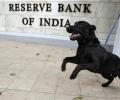
RBI's intention to keep its target inflation rate at 5% was the main reason behind keeping rates unchanged, says Adhil Shetty, CEO of BankBazaar.com.

'Higher interest rates make gold less attractive as it doesn't generate yield.' 'However, with rates set to fall, the tables are turning for gold.'
Benchmark indices Sensex and Nifty declined in early trade on Wednesday due to selling in financials, oil and IT stocks amid weak global trends.
The cut is being seen as an emergency measure to boost the US economy.

An escalation in the already simmering tensions between North and South Korea, China and Taiwan, and Russia and Ukraine could prove to be a bigger worry for the markets over the next few months rather than central bank policy action, said analysts. The markets, they said, are still not fully factoring in this possibility. "The conflict between Iran and Saudi Arabia is another geopolitical worry.

Foreign investors have continued selling in the Indian market, pulling out a massive Rs 85,790 crore (around $10.2 billion) from equities this month due to Chinese stimulus measures, attractive stock valuations, and the elevated pricing of domestic equities. October is turning into the worst-ever month in terms of foreign fund outflows. In March 2020, FPIs withdrew Rs 61,973 crore from equities.

Tata Steel was the biggest gainer in the Sensex chart, rising 2.39 per cent, followed by Tata Motors, Power Grid, Reliance Industries, UltraTech Cement, NTPC, Nestle, HUL, Mahindra & Mahindra, Wipro, Kotak Mahindra Bank and Asian Paints. In contrast, Bajaj Finance, IndusInd Bank, Axis Bank, Bharti Airtel, Bajaj Finserv, ICICI Bank, Infosys and Titan were among the laggards.
Corporate bond issuances fell by around 22 per cent in August, despite easing yields as issuers delayed raising funds awaiting the US Federal Reserve to start cutting interest rates from this month. Corporates and financial institutions expect yields to fall further and borrowing costs to become cheaper, said market participants. The US Fed is widely expected to cut interest rates by 25 bps in the 17-18 September meeting, marking the start of a downward interest rate cycle.

It is by now quite clear that in all likelihood the US Federal Reserve will hike interest rates in its next meeting in mid-December.

Foreign banks and private credit funds are queuing up to fund acquisitions by Indian companies who are buying out their local rivals. The Adani Group, Torrent Group, and the Hindujas have approached several foreign banks and private equity (PE) firms to fund their acquisitions. Global investors have about $2 trillion of funds to invest, and about $100 to $150 billion is set aside for India, according to an estimate by JP Morgan.

If the DMK is able to sustain the momentum until the assembly polls, the AIADMK especially and the PMK and possibly the infant TVK too would find it hard to sign up with the BJP, explains N Sathiya Moorthy.

Tata Steel, Tech Mahindra, NTPC, JSW Steel, Power Grid, UltraTech Cement, HCL Technologies and HDFC Bank were among the major gainers. Bharti Airtel, Hindustan Unilever, Axis Bank, Reliance Industries, Kotak Mahindra Bank, ICICI Bank and IndusInd Bank were among the laggards.

Axis Bank, Tata Steel, Kotak Mahindra Bank, ICICI Bank, Tata Motors, and Bajaj Finance were among the other major laggards. Tata Consultancy Services, Reliance Industries, UltraTech Cement, Infosys, HCL Technologies, and Tech Mahindra were among the gainers.

The Reserve Bank is likely to maintain status-quo on the key interest rates for the third time in a row in its upcoming bi-monthly policy review despite the US Federal Reserve and the European Central Bank hiking benchmark rates, as domestic inflation is within the RBI's comfort zone, say experts. The borrowing cost which started rising in May last year has stabilised with RBI keeping the repo rate unchanged at 6.5 per cent since February when it was raised from 6.25 per cent. In the previous two bi-monthly policy reviews in April and June the benchmark rate was retained.

'The selling in India may emerge as soon as the RBI reverses its interest rate stance.'

The Reserve Bank's rate-setting panel will start its 3-day deliberations on Wednesday amid expectations of yet another rate hike of 50 basis points to check high inflation, in line with similar actions taken by other major central banks, including the US Fed. Based on the recommendations of the Monetary Policy Committee (MPC), the RBI had effected 50 basis points increase in repo rate each in June and August after raising the short-term lending rate by 40 basis points in an off-cycle decision in May. The MPC, headed by RBI Governor Shaktikanta Das, is scheduled to meet during September 28-30.

The Reserve Bank of India (RBI) abstained from selling any US dollars throughout February, for the first time in nine months. The decision comes amid increasing pressure on the rupee, as expectations of rate cuts by the US Federal Reserve keep pushing back. The last time the RBI did not sell dollar over a month was in May 2023.

Movement in the stock market this week will largely be driven by global trends, macroeconomic data announcements and trading activity of foreign investors, analysts said. Equity benchmark indices, which are on a dream run for the past several days, will also track trading in global oil benchmark Brent crude and movement of rupee against the US dollar. "The next FOMC (Federal Open Market Committee) meeting is scheduled for mid-September, but before that, the market will be closely watching upcoming US economic data.
On the Sensex chart, Bajaj Finserv, Maruti, Larsen & Toubro, Bajaj Finance, Infosys, Axis Bank and ICICI Bank were the biggest gainers. Hindustan Unilever, JSW Steel, Titan, NTPC and Tata Motors were among the laggards.

All policy planners want low interest rate, says Jaitley

India's gross domestic product growth rate slipped to 7%.
 © 2026 Rediff.com - Advertise with us - Disclaimer - Privacy Policy - Sitemap - Feedback - About us - Terms of use - Grievances